Wednesday, December 7, 2011
Lucky Number 15
A reflection for the last post seems like a good idea so here goes. This class had a huge impact on my interest and thoughts about literature. I was most nervous about taking this course, but it was the only one that could satisfy my class list and work best for graduation. I had no idea what rhetoric was, how to pronounce it, what it did or why it was important. But the class ended up being my favorite and where I showed most interest.
I am very passionate about the environment, recycling, nature, animals and how to conserve energy. I think it was relating the rhetorical strategies to the environmental texts that drew me in most. Reading different authors with different writing styles and passions was what allowed me to understand rhetoric the most. I appreciated how we took a theory and would apply it to a single text or two. This process made it not only able to relate to but understandable. I used the skills from the theories to write my final paper for my senior seminar. For my 26 page paper, I analyzed three films that dealt with food, another environmental issue. Using the knowledge learned from this class, I was able to complete a well rounded analysis of the rhetorical strategies in Fast Food Nation, Food, Inc. and Super Size Me.
The class discussions were most interesting as I always loved to hear what other classmates opinions were on the texts we read. This class was probably the most successful one at the discussion type of set up. As a wrap up to the class, I think it is beyond fitting that we are watching wall-E. It is a very well done film, and takes the huge topic of environmental issues and pollution and makes it understandable for not only kids, but the entire viewing audience. The realities of the film are not only realistic but are in gear of occurring. it is a scary thing, but from the class discussions I can see that I am not the only one who cares deeply about these issues. The class made me optimistic that maybe the future of our earth isn't all doomed. As I complete this final semester of my studies, I found the four classes I enrolled in to be extremely enjoyable. This was the first semester I didn't feel nervous to present projects or presentations. It's a good thing too because I had at least one in every one of my classes. I look forward to taking this education and applying it to a real life in the real world. I hope that I will be able to continue to have a positive impact on the world around me and that my passions for these issues will help change the world.
China - not just a big population
China has a huge waste and landfill problem and it is overtaking their lives. From watching Wall-E, the reality of the photographs of the landfills are even more heart-breaking. It is sad that the story of Wall-E could easily become real occurrences. We are already on our way there through Skype, Smart phones and our other technological advances. People are more concerned with the latest gadgets than the reality of the status of the world.
The first photo of the collection shows a mother and daughter who live underneath the piles of waste waiting to be recycled. The quote along with the photo encourages the government to step up and help with this epidemic. Another photo shows a hugely massive landfill, where atop are three tiny people. The immensity of the trash even just through the photographs is breath-taking, but in a very frightening way.
Along with this photo the caption reads, "Some of China's garbage is eventually incinerated but a Chinese government study found that regulations allow incinerators to emit 10 times the level of cancer-causing dioxins permitted in the U.S.." The dump is poisoning the ground and the air, plants and people. Insects are infecting the food, the smell carries on miles past the trash and fields are unable to be harvested because of their toxins.
It is completely awful that while they are trying to get rid of the trash, not in a very environmental way, but more for the sake of their people, but the government allows for much more cancer-causing dioxins to be emitted into the atmosphere. This not only affects the Chinese, but the world. Many people agree that the United States should stay out of other countries policies, but something this extreme and drastic, that impacts the citizens of the world, is something that should be considered.
The photographs of the landfills with their massive mountains of trash continually remind me of the images to the opening of Wall-E, where NYC has skyscrapers of trash. This is a going to be reality if extreme steps are not taken. Reading through the collections of environmental texts shows how this has always been an issue that needs to be addressed, but somehow gets ignored. While it may be "in" right now to be green, organic and environmental, it is something that everyone needs to embrace and care about as an issue.
http://www.msnbc.msn.com/id/33228978/ns/us_news-environment/displaymode/1247/?beginSlide=1
Wednesday, November 30, 2011
Antibiotics in Animal Feed, Not Being Banned. DUN DUN DUN..

After watching films like Fast Food Nation, Super Size Me and Food, Inc. it is clear that America has some issues with food production that have yet to be addressed. The overruling corporations that create the meat we eat and the meat that fast food industries serve engage in completely immoral practices. The film Fast Food Nation shows the meat packing plants and how they operate business. The plant uses assembly line workers to prepare the cows meat for consumption. Often the stomach of the cow is ripped open, leaking the contents of the intestines in with the actual meat. There is feces that is now in the meat. In one single burger, there can be meat from hundreds of cows. This means that if there is a disease in the meat and someone gets sick there is no way of tracking where the cow came from. This is what happened during the E. coli breakout. Food, Inc. shows chicken raising houses and speaks with a woman who grows chickens for Tyson. She explains how the chickens have antibiotics put into their food and other chemicals to make them grow at a faster rate. While this may be great for the companies because they can produce more product in a shorter time frame, it is absolutely horrendous for the chicken. They cannot support their own weight. Keep in mind these antibiotics and pesticides in the chicken are now in your system too if you are consuming the meat. Super Size Me shows how fast food makes one crave more and more and is horrible for your health as well as overall well-being. In this article, it states "The Environmental Defense Fund (EDF), the Center for Science in the Public Interest (CSPI), the Food Animal Concerns Trust (FACT), and the Union of Concerned Scientists (UCS) all agree that using penicillin and tetracyclines (antibiotics used to treat humans) in animal feed to bulk animals up and cause them grow faster is an unacceptable threat to public health." Now this seems like many organizations that all feel the same way, but yet the FDA chooses not to ban these antibiotics, not for safety or health reasons, but "any ban will be too expensive." These organizations want to use antibiotics only when an animals needs it, not inject it into all of the food. Not only are these pesticides used in animals food, but also agriculture. An article on CNN shows, "Children exposed to common pesticides are more likely to have problems with attention span, according to a new study that followed mothers and children from the time of pregnancy, to age 5.
The chemicals in question – organophosphates – have mostly been banned from household pesticides, but are widely used in agriculture. At high doses, they are known to be highly damaging to the brain and nervous system." This seems more immoral that injecting these pesticides into our food anyway! I think the FDA needs to look into these issues and examine the problems that these injections cause in humans.
Learn more: http://www.naturalnews.com/034148_antibiotics_animal_feed.html#ixzz1fEU26UtR
http://thechart.blogs.cnn.com/2010/08/19/pesticide-exposure-linked-to-adhd/?iref=allsearch/
Saturday, November 26, 2011
Fast Food Nation
Fast Food Nation is a fiction film that was based on a non-fiction book. The film addressees the issue of the fast food industry and their production flaws. The film uses visual rhetoric as well as traditional rhetorical strategies One scene in the film has a worker of the meat packing plant fall into one of the machines. The visual rhetoric is strong in this scene because it is showing the audience how awful these plants can be. The shot clearly shows his leg in the machine, blood splattering everywhere. The scene is full of chaos as the other workers scramble to get him out of the machine. The movie is using emotional appeals here because the audience can not help but be effected by the awful image.
Fast Food Nation does not hold back any the information or seem to censor it for the
audience. The purpose is to create a reaction from the audience. Within the
film, Rudy bluntly states, "Cattle, human beings. This machine don't give
a shit." The "machine" he is referring to is Mickey's - the fast
food corporation. The blunt and abrasive language is a way for the rhetoric of
the film to reiterate the statement and beliefs it represents to the audience.
Speaking so directly about the occurrences’ is a way to shock the audience into
understanding the truths about how fast food is produced.
It is very disgusting and adds to the argument of the film. Another way rhetoric works in the film is in one scene where a worker is describing his work to his family. He describes how the hot steam burns their skin and what he sees in the plant. His family has a reaction that shows the audience how awful these conditions are. There is also a naturalist rhetoric at work. A worker in the headquarters building goes on a tour of the cow fields to see where the meat is produced. Tests had revealed that there was cow poop in the meat, and he was curious how this was happening. The owner of the land gave him a tour, explaining how people dumb dead animals and trash on his property. He informed the headquarters worker that inside the kill room at the plant, the belt is moving too fast for the workers to do their job to the best of the abilities. The cow is cut open and the intestines and what is inside is spread on the meat. There is also thousands of cows meat within one patty. The film follows many people of the corporation and shows the audience the actual conditions in such an environment. The film's rhetoric is graphic, showing cows being slaughtered and the awful environment where the food is produced. The film is successful with its rhetorical strategies because it makes the audience think about where their food is made.
class canceled work
The article about the population threatening the world's resources was extremely interesting to read. I think what the UN secretary said about the issue effecting "our entire human family" was a key viewpoint others should adopt. It is true that the population increasing so rapidly is going to have negative effects for everyone. More people create more waste, which creates more pollution, which creates less air, less environment; animals and trees. The overpopulation issue is one that needs to be seriously thought about in politics. It crosses over into ethics when the discussion turns to limiting families to one or two children, but it is a conversation that needs to be started.
Jason Clay, in the TED talk video, brought up some very interesting issues of big brands. He stated that there are limits of our resources and live, collectively, on one single planet. Data for brands are constantly changing, how can we know what products are better or worse than others, how the chemicals effect the product and who produced it and how. Sustainability on our planet is very important, everyone must work together to allow the planet to still support us. We have to work not only with each other, but with the planet. There is only one planet that we all share but are still living in a greedy fashion. The resources the earth gives us will not forever be there. The commodity chart was very interesting because all of these companies are controlling 25% of the trade of the most used commodities on the planet. The companies should change their way they create the products by using bio diverse and products that are sustainable.
The Tribal Natural Resources video showed teenagers who come and ride horses. All of the children spoke very highly of the experience. They stated they get to learn, respect the animal, work on the ranch on a low maintenance scale. Everyone "owns" the reservation and the horses, it is open to the community. Their program is sustainable and the children gain much from their time spent there. Being outdoors alone is a great way to open your mind and relieve stress. I believe that nature is the cure for every problem. Sustainability is important because it is the ultimate way of recycling. Collaberating with other partners are a great way for a company to help itself while helping others.
These three resources are great examples of how sustainability is possible and needed to survive in a world where the population is 7 Billion and growing every day. The citizens of the world need to be open to sustainable options of living to work together to better the earth and ourselves.
Jason Clay, in the TED talk video, brought up some very interesting issues of big brands. He stated that there are limits of our resources and live, collectively, on one single planet. Data for brands are constantly changing, how can we know what products are better or worse than others, how the chemicals effect the product and who produced it and how. Sustainability on our planet is very important, everyone must work together to allow the planet to still support us. We have to work not only with each other, but with the planet. There is only one planet that we all share but are still living in a greedy fashion. The resources the earth gives us will not forever be there. The commodity chart was very interesting because all of these companies are controlling 25% of the trade of the most used commodities on the planet. The companies should change their way they create the products by using bio diverse and products that are sustainable.
The Tribal Natural Resources video showed teenagers who come and ride horses. All of the children spoke very highly of the experience. They stated they get to learn, respect the animal, work on the ranch on a low maintenance scale. Everyone "owns" the reservation and the horses, it is open to the community. Their program is sustainable and the children gain much from their time spent there. Being outdoors alone is a great way to open your mind and relieve stress. I believe that nature is the cure for every problem. Sustainability is important because it is the ultimate way of recycling. Collaberating with other partners are a great way for a company to help itself while helping others.
These three resources are great examples of how sustainability is possible and needed to survive in a world where the population is 7 Billion and growing every day. The citizens of the world need to be open to sustainable options of living to work together to better the earth and ourselves.
Saturday, November 19, 2011
Super Size It Baby
The film Super Size Me, created by and starring Morgan Spurlock, is an important view at fast food within America. The film uses rhetorical strategies of the corporation of McDonalds to show how it is effecting the consumers. In the film, Morgan shows 1st graders pictures of presidents and then fast food logos and asks them to identify who they are. Only one child knew the image of George Washington, no one knew Jesus but they all were able to correctly explain the image of Ronald McDonald. Every child is exposed to these marketing techniques and now advertising is specifically targeted at children. One expert in the film compared what fast food corporations are doing with their ads towards children to those of cigarettes. By the time the children are aware of what they are actually eating, it is already ingrained in their minds that this is food. Fast food is creating obesity, heart disease, and many many many MANY other health concerns. Everyone who engages in eating fast food often uses the excuse that they are too busy to cook and eat correctly. Eating correctly is more than needed for our lives. Good, fresh, raw foods allow our bodies to function how they were meant to. Fast food leaves one craving for more, and all of the nutrition one does get from the food ingested is not good for their bodies, and it is either too much or not enough of what we need. Morgan limits himself to 5000 steps a day, which is what the average of most Americans walk. This is not nearly enough exercise in a daily regimen to remain healthy. Not only is the food being produced hurting our health, but obviously the corporations creating this market are gaining much profit. The food is created for the consumer to crave more later. This is absolutely not the point of food. Food that is beneficial to the body leaves one feeling full and energized, not the point of a McDonalds meal. Individuals are aware of these problems within the food world, but to make a huge shift and change is going to take some action and demand. I'm glad that the information is out there, but it is what we do with it that is important.
Buying local.
Buying local seems to be one of the key solutions to how people can make a change by doing their part for the world. According to a recent article on NPR, the local food market reported that they are selling $4.8 billion dollars of fruits and veggies a year. Not all of the sales come from local farmer's markets or stands, but from grocery stores and restaurants.it is important to not only be aware of where your food is coming from, but also to be conscience of the impact food purchases have in the world. Highways and mass production from food corporations allow food to be shipped from anywhere, and allow the consumers to gain access to the food from all over the country. This adds much pollution to the world. The trucks take their product thousands of miles from where it is produced. Produce is shipped to grocery stores from all over the world, even if it is not in season. On top of the added pollution and expenses it creates, the food needs to have injections and be literally created in labs to survive the trip. Food is often frozen for the travel, and then put out to thaw. Not only is the pollution hurting the world, but the food is now hurting the consumers bodies. Buying local means supporting local farms. Farmers markets are great places to engage with the community and purchase food from local farmers. By supporting the local farms, more money is put into their personal business, which allows them to produce more. Speaking with those who grow your food is important as it allows the consumer to really know what is put into their bodies. it is important for consumers to speak up because we are the ones who control the food market. Gluten free and organic foods can now be found within every grocery store. All natural healthy options are offered everywhere, but this does not mean we are becoming a healthier nation. We need to make the decision to eat better, buy local and be aware of where ur food comes from, and what exactly is in it.
Link to Allentown Farmers Market:
http://www.fairgroundfarmersmkt.com/
http://www.npr.org/blogs/thesalt/2011/11/14/142306970/local-food-is-no-small-potatoes-farmers-rake-in-almost-5-billion
Tuesday, November 1, 2011
OVERPOPULATION
This week the world population will hit 7 BILLION people. Over the weekend, CNN had their Quick Vote poll as the question "Are you concerned about overpopulation?" I voted YES. The results had a larger majority of people voting yes, but not by much. It looked about 51% yes to 49% no. In an article by Fred Pearce entitled "How women defused population bomb," he states that women are having less kids and "The global average is now down to 2.5 children per woman, and it continues to fall." Overpop. is a serious problem because the resources the earth provides cannot support this many people. It is interesting that this one huge problem relates and correlates to so many other problems. Having more people means a need for more consumption. More people need more places to live, which cuts down more of the environment. More cars and other types of transportation are on the road. Due to more people, more tractor trailers to support the need for food and larger demand for products. The increase of vehicles adds to the increase of CO2 within the environment. Then, because we have cut down trees and the environment is becoming scarce, the oxygen production will be at a lower level, while the carbon dioxide is increasingly increasing. At the end of the article he places his own views that consumption is a larger problem than population. "It is the world's consumption patterns we need to fix, not its reproductive habits. Every time we talk about too many babies in Africa or India, we are denying this fact." – Pearce. All of these issues spring up as even more intense problems because the population is growing. Like with everything, one action causes many different effects to take place. A blog on the Huffington Post had two real catchy phrases about safe sex, “"Hump smarter, save the snail darter." "Cover your tweedle, save the American burying beetle." Suckling also wrote, “The connection between population growth and species extinction is unavoidable.” This is another problem that overpopulation will directly cause. The cutting down the environment to make room for more humans means less room for the animals within the world. This is a serious problem, like most other serious problems it is being ignored because people think it doesn’t directly affect their lives. We need to take drastic steps now in order to decrease such devastating effects.
http://www.cnn.com/2011/10/28/opinion/pearce-population-fertility/index.html?iref=allsearch
http://www.huffingtonpost.com/kieran-suckling/7-billion-population_b_1068567.html
Wednesday, October 19, 2011
Trash and Waste and Environment and Soup
SOUP!!!!


For dinner, I was making some nice Campbell’s Mushroom Kettle Bisque, a very delicious meal. Even in making such a simple meal, there was a lot of waste. The container is non-microwaveable, so you must use a bowl. Opening the soup, there is a tin-lid underneath the original lid. Then to microwave the soup, I had to put Seran Wrap over top the bowl as to not splatter in the microwave. After the soup was heated, I put the soup in a new bowl because the one from the microwave was burning hot. The soup takes about 5 minutes to actually eat, but wastes all of this within the process. Soup may be the simplest meal like ever, so just imagine how much waste is produced from any other type of food. Everything is so individualized and packaged for convenience within these busy lives, but the waste that is created is so much greater than we can imagine. A case of water for instance, the plastic used for every individual bottle and paper. The bottles are stacked on cardboard then wrapped all together in more plastic. The water gets consumed, but the plastic, all the plastic, is what is left in the environment. This is another reason why recycling is so important. The immense amount of waste needs to be reused in some type of way, so it doesn’t just sit and pollute the land and the oceans. In Virginia Beach, they have a Mount Trashmore, which is a park created on top of a landfill. The waste is now underneath grass and paths that can be used for walks, Frisbee, bike rides, skateboarding, exercise, picnics, playgrounds, and kite flying. I’m not sure if this is the answer for all of the waste, but it is a way to utilize this area that would be a dump, for people to be outdoors. This famous park took a negative use of land and turned it into a positive one.
Mt. TRASHMORE
Overpopulation and Nature
Friday, October 7, 2011
iShop -- so you don't have to
Today (as well as everyday leading up to today) at work I was thinking a lot about the need for recycling. I strongly believe that if we are going to be using such resources, especially with our intense rate of consumption, the least we can be doing is recycling our used products. I work in the iShop Department of Weis. We shop customer's grocery orders and they come to pick it up. This process takes the online order and puts it on a shopping gun, telling us what asile each item is located. The gun has all the information as the online request, yet everyone in the department also prints out a copy of the order. The printer, due to being junky, only is programmed to print on one side of the paper. I have asked the computer tech if he could change it to print on both sides and he replied that because the printer isn't high quality, the paper just gets stuck and he would be there every day for repairs. I'm the only one who does not print out the order and only shops using the gun. When we are done shopping, we upload the order and print the exception report. I print page one, then put the sheet back in the printer and print pages 2 -3, and so forth. It upsets me greatly that I am the only person who is conscientious about how much paper is wasted. I'm almost certain that few of the customers actually look at the stack of paper we had them. On average, each customer probably receives at least 10 pages, one sided, of their order. The thing that is even more aggravating is that the name, iShop, stands for "Internet Shopping" aka all of their order requests and also what items they received ARE ON THE INTERNET. I do my best to save the paper, and choose to take it home instead of throwing the paper out with the other recyclable products in our trash; ironically is a recycle bin. One person can only do so much.
I am glad that I do my part of recycling, but it is nearly not enough to compete with what my co-workers do not recycle. I think of this ratio in a mass scale and it is absolutely saddening.
The earth recycles as dead animals decompose into the soil for new life to flourish. We use the plants for oxygen, as they use us for carbon dioxide. I believe all the answers to life and lessons needed to be learned can be understood through the earth. The word recycle even explains itself, we are cycling the process again. The life cycle recycles itself and therefore creates sustainability.
Recycle the paper, people!! -- it's driving me crazzy
Thursday, October 6, 2011
Bikes and Trikes
I love bicycling; the wind in my face, feet on the pedals, speeding through the world. The feeling of satisfaction I receive from riding is amazing. I can release my energy and stresses, while exercising and being outside. To me, it is the ultimate passage of time.
While on the way to my desired destination, usually the Lehigh Parkway, I find myself on main roads. I like riding in the Parkway because it is an escape from everyday life. There, I am surrounded by nature; animals, water, trees, air and other people enjoying the day. Spending an hour or so on the path frees my mind and creates my body to feel rejuvenation. But on the main roads, where the cars zoom by, is where I am snapped back into reality of the everyday. When a car passes me riding on the side of the road, I am immediately overwhelmed with the exhaust. It hits me like a cloud, but not the type up in the blue sky. It always disgusts me that I have to breathe this into my lungs in such close proximity to where it is produced. My breathing rate is increased due to exercising and also what I depend on to continue. The effect from one car passing is nothing in comparison with the total exhaust produced by cars. We do not notice how much is exhaled from our use of transportation -- it's disgusting. When I'm passed by a car, inhaling the fumes, I can only think of how our pollution has to be inhaled and absorbed by nature. I feel awful that our daily lives have to result in forcing the natural world to absorb the pollution. It's great that trees and plants absorb this CO2, but the rate we are depleting them, and increasing our waste is not an even balance.
Minneapolis, MN is the number one bike city in the country. According to the Minneapolis city website, "Minneapolis has 46 miles of streets with dedicated bicycle lanes ... and 84 miles of off-street bicycle paths."
More people should bike to get around town. I'm glad there are cities that incorporate those to cycle into their plans for building. This issue is like the art imitates life or does life imitate art type of question. For example, if more people biked, maybe cities would be more interested in helping the commute become easier and safer. On the other hand, if cities naturally would incorporate bike lanes and paths, maybe people would bike more because the option is there. Being aware of alternatives to conserving gas and reducing pollution need to be considered as part of the solution in helping to save our environment, because in fact "this land is our land."
http://www.ci.minneapolis.mn.us/bicycles/
http://www.bicycling.com/news/featured-stories/1-bike-city-minneapolis
Sunday, October 2, 2011

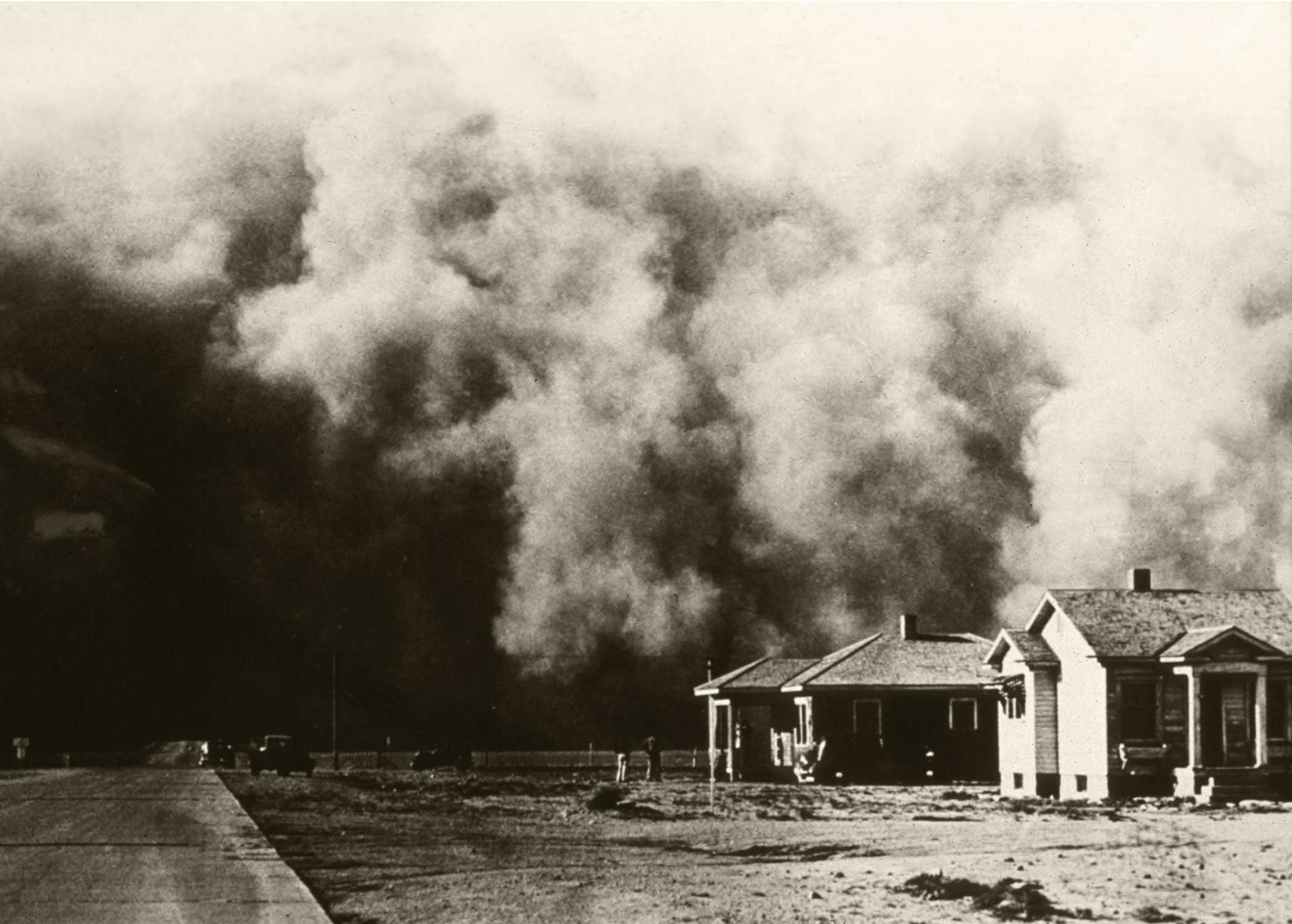
The reading we had by Henderson entitled Letter from the Dustbowl was very emotional and interesting to read. I have never read something from someone living during that time and had only learned about the Dustbowl from an educational perspective. Reading about her hesitance to leave gave a good insight to the love and need for the land that the farmers possessed. She explained that they were "trying to rescue [their] home." Her writing about the transition from the green, lush land to the desolate dirt was heart breaking. I cannot imagine the experience of seeing this process occur on your own land. She further writes about a neighbor who tried to seal their windows but "no method...is effective to keeping dust out." The impact from the overuse of the land caused the earth to dry out. The cause of this occurrence was due to the people's impact of not rotating crops; they overused the nutrients and essentially killed the dirt. Now we know that each year the crops must be changed, this is why we see corn one year and soybeans the next. The different plants absorb different nutrients from the earth. This got me thinking a lot about our daily use of the land. Today, we are more educated on the correct farm practices and how to utilize the land in a maximum manner. I’m not sure if this is caring for the land, as much as it is for our own personal profits. Henderson states “perhaps if we do our part [trees, birds and flowers] will return someday.” Even in present day we know that we need to do our part to protect the environment. There is a constant craving for profit, and over use of the earth. With the dust bowl, there was a something physical, the dirt, to have a reaction to. It was coming inside the houses and causing devastation throughout the entire region. With our overuse of the land today, there is not something immediate and physical to witness the repercussions of our actions. Human beings need to realize that their actions are going to affect the future, especially with using the earth at our disposal. The reading of this letter made me think about how much the earth needs to be catered to in order for its own survival. The earth must survive first, in order for us to live in harmony with it.
Tuesday, September 13, 2011
Rural Hours Response

The reading of Susan Fenimore Cooper's Rural Hours really resonated with me this week. She speaks a lot about "the preservation of old pines" (57) and the trees impact on the world. Cooper mentions how it tkaes many years for a tree to grow. It needs time from a seed to evolve into a sapling, then a young tree into a statuesque evergreen. The rainfall it acumulates through its roots gets absorbed and gives the tree a stronger base. The sunlight powers the leaves, letting them produce chlorophyll which allows plants to gather energy from the sun. This process is quite magical and is the basis of powering the ecosystem. All the hard work and dedication it takes from the environment to produce such an incredible tree can be cut down by a chainsaw in just a few short minutes. A tall and noble tree seems to have wisdom from all the changes and events it has seen. Planting new trees just does not benefit the environment in the way some people may think.
Cooper's discussion of this issue related to this week's 10th anniversary of September 11th. For the memorial they took a tree that was planted outside the World Trade Center and was over 90% ruined due to the attacks. After being cared for and nursed back to health, it was replanted in the memorial and is now just as strong as ever. They are calling the tree the "Survivor Tree" and it is a very inspiring story. I think for the city of New York and the country, it is a symbol of hope for America. The attacks on 9/11 were designed to damage the country as a unit. Today, we have stronger security, a stronger city of New York and a stronger tree.
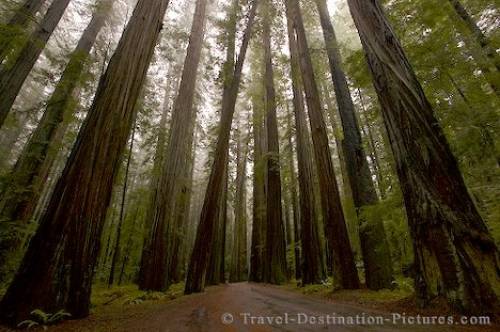
In 9th grade I took a trip to California and we went to the Redwoods. It was amazing to see first hand the gigantic trees together in a forest. The trunks of the trees were immense. Looking straight up the tree, it seemed to go on forever. I found it interesting that their root system is shallow, but the roots interlock together to hold up their neighbors. The example these large trees represent of community is something human kind can learn from. No matter how important or famous someone becomes,they still need their own support system to hold them up.Trees represent life and can be a great example of community. They work together with nature and humans to produce and sustain life. Cooper acknowledges the importance of trees and to preseve the natural beauty nature holds.
Read about the Suvivor tree HERE!!!
Friday, September 9, 2011
In class on Thursday, we discussed Thoreau's Walden and his appreciation of nature. Something that really stuck out to me was the idea and/or definition of nature. Google's definition of the word is the following: The phenomena of the physical world collectively, including plants,
animals, the landscape, and other features and products of the earth, as
opposed to humans or human creations. How individuals have different definitions of nature impacts their
awareness of what they should do to conserve. Some people may think of a
park, or their backyard as being nature. Or maybe a mountain or state
park. The idea of man made areas counting or not counting as nature is also an interesting argument.
It seems that what is to be defined as nature, should be natural to the earth. A plant or flower, or tree is a natural entity of the world, but if humans plant this does that take away the definition? Currently, many people inhabit and overpopulate the world. Times have changed from the 1800s, technology is rapidly effecting every part of human life. I think it's fair to say the definition of nature also has to change. Even though everyone's personal concept of nature is different, I feel that as a whole most definitions would exclude humans from "nature." It is interesting that instead of trying to coexist and use nature to enrich our lives, society tries to separate in order to survive. It was mentioned in class that we, humans, essentially need nature to survive, but it doesn't need us. Although I have not realized it, this is a strong belief I have. The overall respect of the earth and nature is a strong value of mine. Without living off the grid, or completely converting my lifestyle, I feel that the little things I do everyday to conserve energy or recycle does make an impact on the world. I always feel that I could do much more. The idea that I don't think I'm doing enough often makes me angry when I think of people who aren't as aware or caring and how much they waste without realization of the fact.
To conserve nature we must all make a small change to our everyday lives. Nature is made of ecosystems, and no matter what your personal definition of the word includes, nature needs to be preserved. I don't feel there can be a "wrong" explanation of nature. Who is to say that just because there is a tree on a city block doesn't make that nature? I think our idea of nature is that of a wooded area, but a single frog or area of grass is defined as being a part of the whole. I think to limit the idea to large, natural areas is wrong.
One person, even by themselves alone is still a member of the human species. It is the same idea with nature. No matter how big or small, the definition of nature can vary but it is still alive and thriving on the earth. We should appreciate this and value it, because if we don't one day there will be no nature to witness first hand.
It seems that what is to be defined as nature, should be natural to the earth. A plant or flower, or tree is a natural entity of the world, but if humans plant this does that take away the definition? Currently, many people inhabit and overpopulate the world. Times have changed from the 1800s, technology is rapidly effecting every part of human life. I think it's fair to say the definition of nature also has to change. Even though everyone's personal concept of nature is different, I feel that as a whole most definitions would exclude humans from "nature." It is interesting that instead of trying to coexist and use nature to enrich our lives, society tries to separate in order to survive. It was mentioned in class that we, humans, essentially need nature to survive, but it doesn't need us. Although I have not realized it, this is a strong belief I have. The overall respect of the earth and nature is a strong value of mine. Without living off the grid, or completely converting my lifestyle, I feel that the little things I do everyday to conserve energy or recycle does make an impact on the world. I always feel that I could do much more. The idea that I don't think I'm doing enough often makes me angry when I think of people who aren't as aware or caring and how much they waste without realization of the fact.
To conserve nature we must all make a small change to our everyday lives. Nature is made of ecosystems, and no matter what your personal definition of the word includes, nature needs to be preserved. I don't feel there can be a "wrong" explanation of nature. Who is to say that just because there is a tree on a city block doesn't make that nature? I think our idea of nature is that of a wooded area, but a single frog or area of grass is defined as being a part of the whole. I think to limit the idea to large, natural areas is wrong.
One person, even by themselves alone is still a member of the human species. It is the same idea with nature. No matter how big or small, the definition of nature can vary but it is still alive and thriving on the earth. We should appreciate this and value it, because if we don't one day there will be no nature to witness first hand.
Subscribe to:
Posts (Atom)